Tabi-Tabi Po
What Came With Me
I don't watch many movies.
This made dating Hollywood movie producers earlier in my life somewhat interesting. But movies have never really been my thing.
My son asked me to see The Forgotten Island with him, though, so I made an exception.
Between school and sports, the only time that worked was Sunday night at 8 p.m. When we arrived, we discovered we were the only people in the theater.
It felt a little ominous.
An empty theater. A dark room. Just us watching a story set in the Philippines.
And then I heard a word I knew.
Manananggal.
Then aswang.
I hadn't heard those words in a long time. But I knew them immediately.
They belonged to my childhood in the Philippines. To stories I heard when I was little. Stories about creatures and spirits that weren't presented to me simply as folklore. There was always the possibility that they were real.
Then someone in the movie said:
Tabi-tabi po.
And I realized something.
I still say it.
Years ago, I caught myself saying it while walking through a dense jungle in Colombia. And today, when I'm walking through a cemetery, I'll sometimes say tabi-tabi po as I pass.
Excuse me. Please let me pass.
I don't remember anyone teaching me to do this. I just knew there were places you moved through carefully. Places where you showed respect for what you couldn't see.
Because you didn't want to anger the duendes. Or the nuno sa punso.
I remember this from my own family.
When we were still living in the Philippines, my brother fell. A few days later, he suddenly couldn't walk on his own.
I remember my parents walking around the neighborhood with him. I wondered what they were doing.
They were retracing where he had been, trying to find the place where he had fallen. They believed he might have disturbed a duende.
So they walked with him and asked for forgiveness.
The doctors said my brother had polio.
My parents still apologized to the duendes.
As a child, those two explanations didn't necessarily seem incompatible. There was what the doctors knew, and there was what my parents knew.
Both existed in the same world.
Eventually, we left the Philippines and moved to the United States.
I would grow up to become an engineer, someone trained to look for evidence, mechanisms, explanations. Later I became a therapist, where the explanations aren't always quite so tidy.
I don’t believe my brother stopped walking because he angered a duende. .
But I understand why my parents walked the neighborhood asking for forgiveness.
Somehow, those things can still sit beside each other for me.
Sitting in that dark theater decades later, I thought about how much of culture we carry without realizing we're carrying it.
I still say tabi-tabi po.
I had carried those words from the Philippines, through immigration and decades of life in the United States, without ever really thinking about the fact that I still used them.
I don't remember deciding to keep that.
It just came with me.
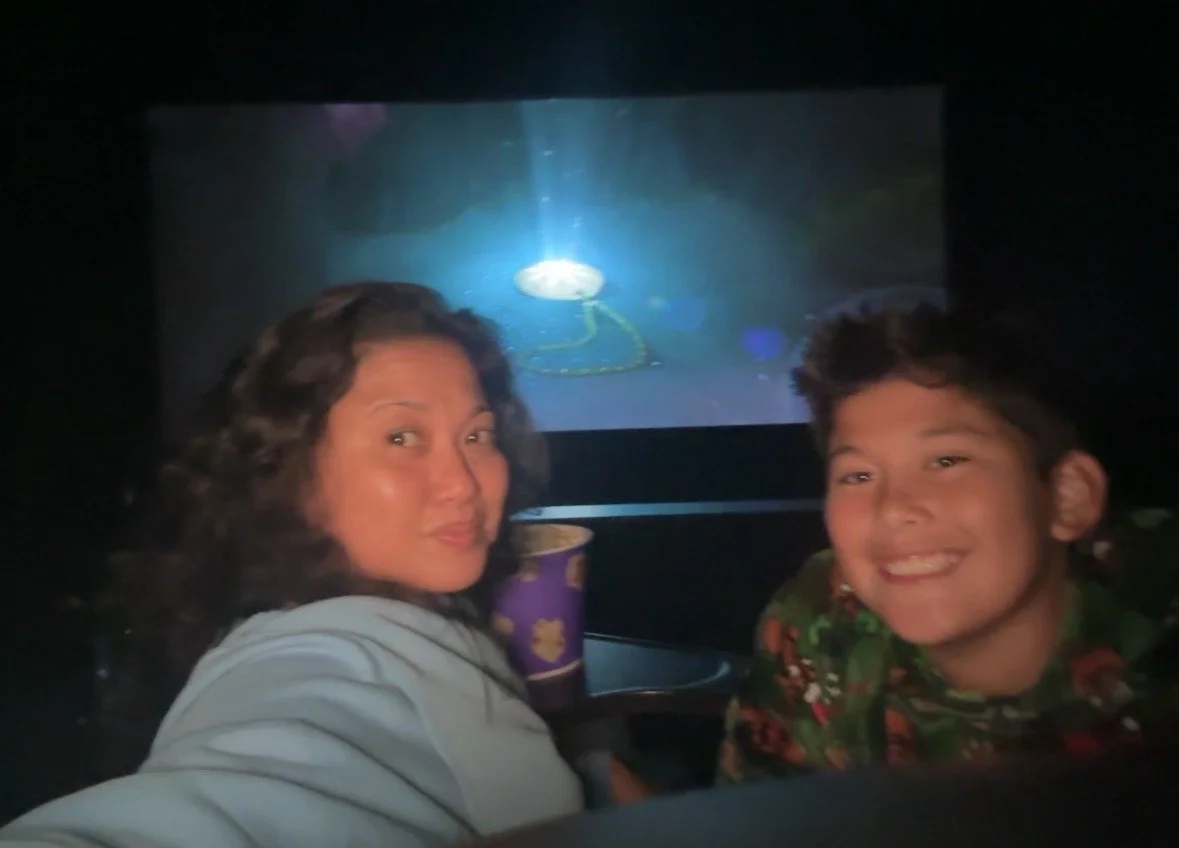
My son loved the movie.
I loved watching him encounter aswangs, manananggals, and duendes as something exciting and new.
He was sitting beside me in a movie theater in Utah.
I was there too.
But for a few moments, I was also a little girl in the Philippines again, listening to stories about things that might be hiding just beyond what I could see.
When the movie ended, though, I had one lingering question.
Why didn't the main characters just turn their shirts inside out?
My mother always said that worked.